
If you have been wondering whether a career in construction is worth it in 2026, the numbers say yes — loudly. The U.S. construction industry is short more than 530,000 workers, and the six major trades now pay median salaries of $51,000–$63,000 per year. That is higher than the median salary of many four-year college graduates, and top earners in trades like electrical and plumbing clear six figures without ever stepping into a lecture hall.
With roughly 20% of the construction workforce nearing retirement and federal infrastructure funding locked in for years, skilled trades have shifted from "backup plan" to "the plan." The real problem? Too many job seekers pick the wrong trade — or miss the higher-paying specializations — costing themselves $20,000 to $100,000+ in potential annual earnings.
The 2026 Pay Landscape: Why Skilled Trades Are the Best Career Bet Right Now
According to the Bureau of Labor Statistics, the median annual wage for construction and extraction occupations is $58,360 — compared with $49,500 for all U.S. occupations. That is an 18% wage premium, and you do not need a degree to earn it. The six major trades — electricians, plumbers and pipefitters, welders, carpenters, HVAC technicians, and construction supervisors — command medians between $51,000 and $63,000, while the top 10% of electricians and plumbers exceed $102,000.
The labor shortage explains the leverage. Industry analysts project 349,000–499,000 additional construction workers will be needed in 2026, and 94% of contractors report struggling to fill craft positions. In the highest-paying states, the ceiling is dramatic: master plumbers clear $115,000–$123,000 in Illinois, New Jersey, Massachusetts, Washington, and California.
Key takeaway: in 2026, the leverage sits with the worker. Employers are competing for you — which means now is the time to choose a trade and get trained.
Trade-by-Trade Comparison: Salaries, Training Time, and Demand
Every trade pays above the national median, but the path, pace, and ceiling differ significantly. Here is how the major trades stack up in 2026:
Trade | 2026 Median Pay | Top Earners | Training Time | Growth Outlook |
|---|---|---|---|---|
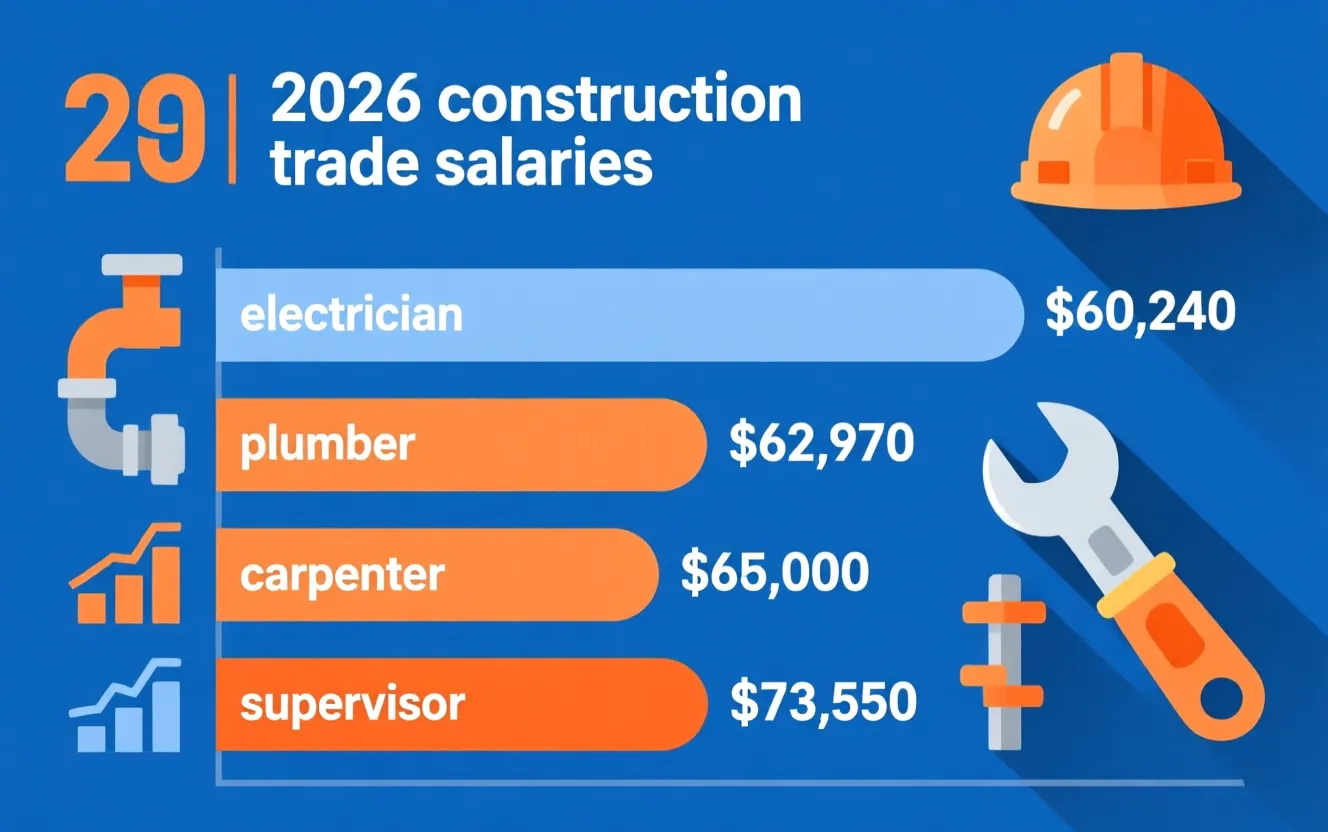
Electricians | $59,240–$60,240 | $102,300+ (top 10%) | 4–5 year apprenticeship | Strong demand in every metro market |
Plumbers & Pipefitters | $62,970 | $102,000+ (top 10%) | 4–5 year apprenticeship | 4% growth through 2034; 42,600 openings/year |
Welders | $35,000–$42,000 (entry) → $48,000–$65,000 (5+ yrs) | $80,000–$200,000+ (specialized) | 6–12 months of training | Steady demand across industries |
Carpenters | $51,630–$56,000 | $80,000–$120,000 (foremen, specialty formwork) | 3–4 year apprenticeship | Moderate, tied to housing and infrastructure |
Construction Supervisors | $73,550 | Varies by project size | 5–7 years from laborer | Strong for experienced workers |
Electricians
Electricians earn a median of $59,240–$60,240, with the top 10% clearing $102,300. The 4–5 year paid apprenticeship combines classroom and on-the-job training, and demand is strong in every U.S. metro — driven by renewable energy, EV charging infrastructure, and building electrification. Electricians earn the most in Hawaii, New Jersey, Illinois, Massachusetts, and New York.
Plumbers and Pipefitters
Plumbers and pipefitters earn a median of $62,970 — the highest of the six trades — with top earners above $102,000. The BLS projects about 42,600 openings per year and 4% growth through 2034, powered by aging water systems and new construction. Master plumbers in Illinois, New Jersey, Massachusetts, Washington, and California earn $115,000–$123,000.
Welders
Welding is the fastest path in: 6–12 months of training gets you to an entry-level job at $35,000–$42,000. With five or more years of experience, welders earn $48,000–$65,000, and specialized welders — pipeline, underwater, or aerospace — command $80,000–$200,000+. Certifications like AWS D1.1 unlock the higher-paying roles.
Carpenters
Carpenters earn a median of $51,630–$56,000. Journeymen with four years of experience typically earn $50,000–$75,000, while foremen and specialty formwork carpenters reach $80,000–$120,000. The 3–4 year apprenticeship is one of the shortest among skilled trades.
Construction Supervisors
First-line construction supervisors earn a median of $73,550 — a realistic promotion path for laborers who put in 5–7 years on site. Supervisory roles reward field experience, safety knowledge, and leadership, making them the natural next step for ambitious tradespeople.
How to Pick Your Trade and Get Hired in 2026
Choosing the right construction job starts with matching demand to your personal fit. Solar installers, electricians, and HVAC technicians are the fastest-growing roles tied to renewable energy and aging infrastructure. The fastest-growing occupations overall include wind turbine technicians, solar panel installers, and fiber/network technicians — many of which hire after short training programs.
Certification is the new currency. OSHA-10/30 safety cards, welding certifications, and state licenses consistently unlock 10–20% pay premiums, and they are the first thing contractors look for on a resume. If you are starting from zero, weigh three paths: a union apprenticeship (4–5 years, paid, debt-free), a short technical program (weeks to months), or an entry-level laborer position that lets you earn while you explore.
When you apply in 2026, move fast: contractors make decisions within 48 hours of the final interview. Lead with your certifications, format your resume for applicant tracking systems, and target the highest-paying states — Alaska, Hawaii, Wyoming, North Dakota, and Washington — if you are willing to relocate.
Conclusion: Your Move in the 2026 Worker's Market
2026 is a worker's market. Every major construction trade pays above the national median, and specialized paths reach six figures without a degree. The opportunity is real — but only if you pick the right trade, get certified, and start now.
Compare the trade table above against your goals, choose one path, and take your first step this month — whether that is a free pre-apprenticeship program or an OSHA-10 certification. The jobs are waiting; the question is which one you will claim.
Download the full 2026 trade comparison checklist or contact a union apprenticeship coordinator in your state to lock in a paid training seat.