

1. Exploding Demand: One of America's Most Wanted Jobs in 2026
America is facing its worst caregiver shortage in decades. According to the latest U.S. Bureau of Labor Statistics (BLS) projections, employment for home health and personal care aides is set to grow 17% from 2024 to 2034 — far faster than the average for all occupations.
The February 2026 jobs report showed health care and social assistance added more than 100,000 positions in a single month, making it the #1 job-creation sector in the nation. Meanwhile, a 2025 AARP and National Alliance for Caregiving report estimates about 53 million Americans provide unpaid family care worth over $870 billion a year — which means demand for paid professional caregivers will only keep climbing.
A Columbia University study adds that nearly half of all U.S. states are at "high" or "critical" risk for family caregiving shortages. The bigger the shortage, the higher the pay and benefits employers offer — which makes right now the best time to enter this field.
2. Real Hourly Pay: $17.21 National Median, Up to $26+ in Top States
According to official BLS data published in May 2025, the national median wage for home health and personal care aides is $17.21 per hour (median annual salary of $35,800), and the top 10% of earners make more than $20.41 per hour. In the states with the biggest caregiver shortages, pay is much higher:
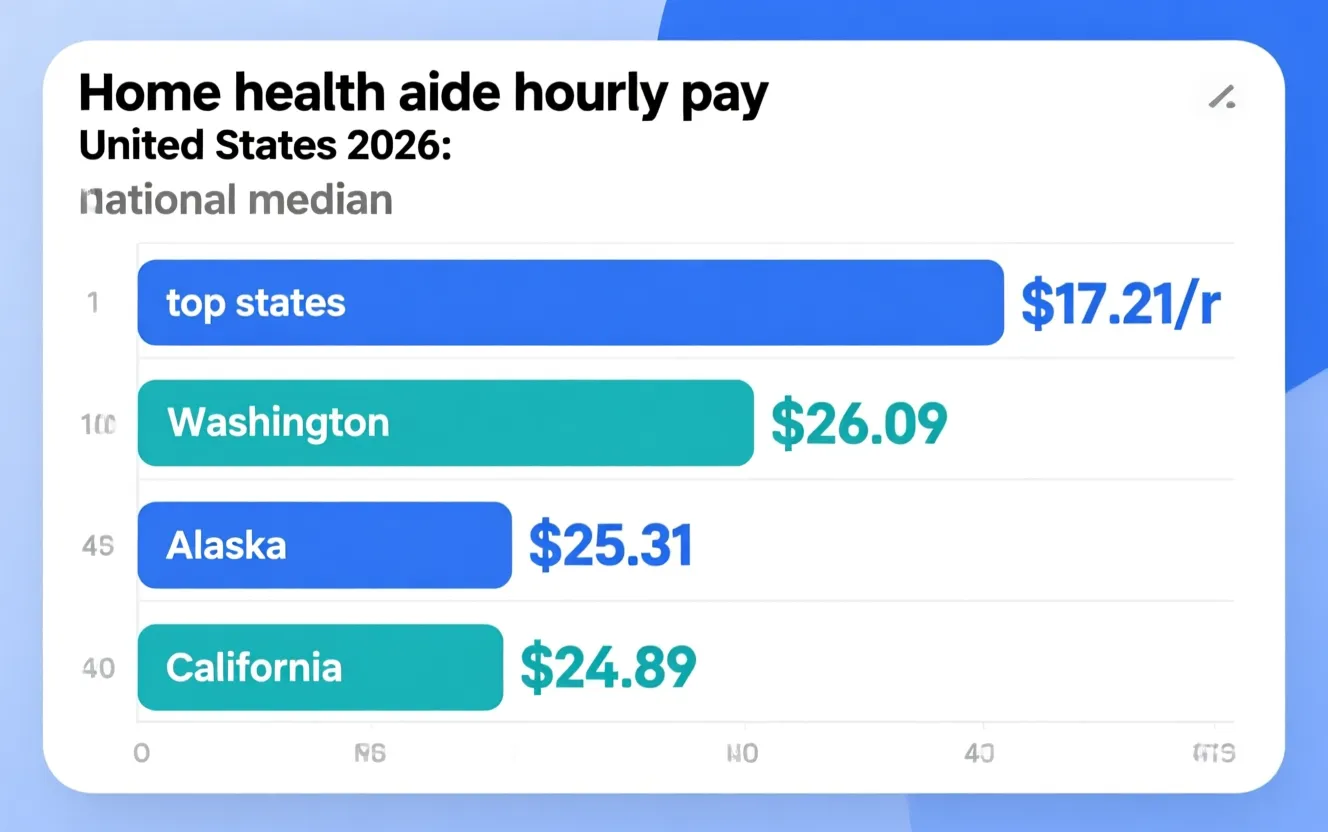
State2026 Average Hourly PayEstimated Monthly Income (Full-Time)Washington$26.09$4,528Alaska$25.31$4,387California$24.89$4,314Massachusetts$24.59$4,262Oregon$24.56$4,257New York$24.25$4,203U.S. Median (BLS)$17.21$2,983
In metro areas like San Francisco, Seattle, and New York City, rates can reach $22 or more per hour. New York State also raised the minimum wage for home care aides effective January 1, 2026: $19.65/hour in NYC, Long Island, and Westchester County, and $18.65/hour in the rest of the state.
3. Weekly Pay: Get Paid Every Week
Unlike many industries that pay monthly, a large number of U.S. caregiving jobs offer weekly pay. Real Indeed listings commonly say: "Starting Pay $18.00/hour | Weekly Pay | Paid Training | No Experience Required." In St. Louis alone, Indeed shows 192 caregiver jobs with weekly pay, with hourly rates between $15 and $18.
Weekly pay means a reliable paycheck every Friday — steady cash flow, ideal for anyone who needs income fast.
4. Paid Training: You Earn While You Learn
Worried about not having a certificate? Don't be. ZipRecruiter data shows paid-training caregiver jobs average $15.54 per hour, with a typical range of $13–$20/hour — in other words, you're earning money during training.
Many employers (such as home care agencies) cover training costs, reimburse HHA certification courses, and provide one-on-one on-the-job coaching. Many agencies also guarantee full training from day one, with clear pathways to advance.
5. No Experience Required: Zero Barriers to Entry
Caregiving is one of the few stable industries where no degree and no experience are needed to get started. Platforms like Indeed and SimplyHired list thousands of "No experience required" positions — for example, St. Louis alone has 17 open no-experience caregiving roles paying $17.50–$20.00/hour.
For new graduates, career changers, and newcomers to the U.S., this is a low-barrier, high-demand career path with rising pay.
6. Check Now: Enter Your Zip Code for Real-Time Jobs & Pay
The numbers above are national and state averages — real jobs and real hourly rates near your zip code change every single day. Scroll back up and click any recommended search term (for example, "Home Health Aide jobs near me") to see caregiving jobs, live pay rates, and benefits in your area right now.
With a massive labor shortage, weekly pay, paid training, and no experience required — 2026 is the year to start a career in elderly care.