
The U.S. home repair industry is entering its strongest hiring cycle in decades. In 2026, 79% of American homeowners plan at least one repair or replacement project, and the handyman services market has grown to $90.95 billion. Yet the industry faces a shortage of roughly 439,000 skilled trades workers — a gap that is pushing wages and benefits higher. Whether you are looking for a stable, well-paid trade job or trying to find a repair service you can actually trust, 2026 is the year to get it right. Here is what the real data says about pay, perks, and picking the right pro.

The U.S. home repair industry is entering its strongest hiring cycle in decades. In 2026, 79% of American homeowners plan at least one repair or replacement project, and the handyman services market has grown to $90.95 billion. Yet the industry faces a shortage of roughly 439,000 skilled trades workers — a gap that is pushing wages and benefits higher. Whether you are looking for a stable, well-paid trade job or trying to find a repair service you can actually trust, 2026 is the year to get it right. Here is what the real data says about pay, perks, and picking the right pro.
Why Home Repair Services Are Hiring at Record Levels in 2026
American homes are getting older and homeowners are staying put. According to Housecall Pro's 2026 Home Services Report, 72% of homeowners plan to stay in their current home for the foreseeable future, and 69% live in homes that are 20+ years old. That combination means one thing: steady, repair-led demand.
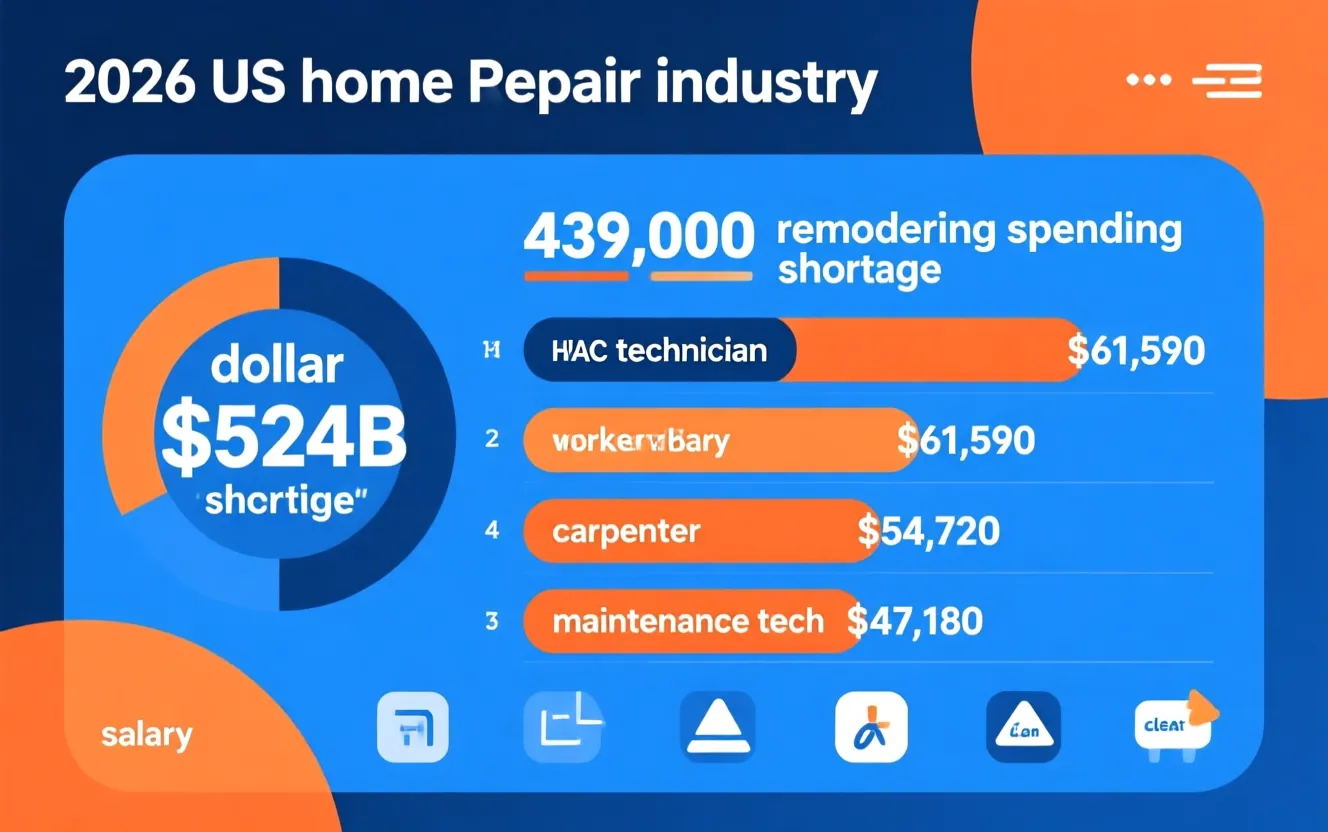
In Q1 2026 alone, repairs accounted for roughly 87% of plumbing jobs, 96% of appliance jobs, and 88% of HVAC jobs. Harvard's Joint Center for Housing Studies projects homeowner remodeling and repair spending will reach a record $524 billion in early 2026, while KPMG estimates homeowners now spend about $608 billion per year on maintenance and upgrades.
The worker shortage is real — and it pays
The other side of the story is supply. The U.S. faces a skilled trades shortage of about 439,000 workers today, and JLL projects 2.1 million skilled trades positions — electricians, HVAC technicians, plumbers, and general maintenance workers — could go unfilled by 2030. With demand this strong, employers are competing for talent with higher pay, sign-on bonuses, and better benefits.
2026 Pay & Benefits: What Home Repair Jobs Really Offer
Pay varies by trade, certification, and region, but the 2026 numbers are compelling across the board. ZipRecruiter reports a median home repair wage around $34,700 per year (about $17–$24 per hour at the entry level), while specialized maintenance technicians average $56,787. Experienced pros in franchise and service companies frequently earn $60,000–$100,000+.
Role2026 Median PayTop EarnersHVAC Technician$61,590$100,000+ (specialized)Carpenter$54,720$80,000+Building Maintenance Tech$47,180$69,229+Appliance Repair Technician$46,700$60,000–$80,000+Home Repair Professional (franchise)$55,000–$65,000$80,000+
Benefits and bonuses are the new battleground
To attract workers in a tight labor market, employers are offering packages that go well beyond a paycheck:
- Sign-on bonuses: $1,500 to $10,000 for experienced techs — $10,000 offers are common at major service companies like Horizon Services.
- Paid training: 150+ hours per year, plus sponsorship for NATE certification and journeyman licenses.
- 401(k) with matching, health, dental, and vision insurance — standard at franchises like Ace Handyman Services and Mr. Handyman.
- Flexible schedules, company vehicles, and free uniforms.
- Tuition reimbursement and promotion-from-within paths — many team leaders started in the truck.
How to Judge a Home Repair Service Before You Hire
With the industry booming, not every company is equal. Knowing how to separate quality work from costly mistakes saves thousands. Experts at ARAG Legal and industry watchdogs agree on a clear set of green and red flags.
Green Flags (good sign)Red Flags (walk away)Licensed, bonded, and insured — and shows proofCash-only demands or full payment upfrontProvides references and verifiable reviewsRefuses or dodges reference requestsWritten estimate and a clear contract before work startsHigh-pressure "sign today" sales tacticsExplains who will do the work (in-house vs. subcontractors)Vague about who is actually on the jobCharges market rates ($65–$125/hr average in 2026)Quotes far below market to bait and switch
Also ask about warranties on labor, how callbacks are handled, and whether the company runs background checks on technicians. Reputable firms are happy to answer — hesitant ones usually aren't.
Your Next Step in 2026
Whether you're ready to start a high-demand trade career or need a reliable repair done right, the 2026 home repair market is full of opportunity. Search terms like "home repair services near me," "ac tune up near me," or "foundation repair" to find licensed pros in your area — and use the checklist above before you sign. On the job side, look for companies advertising sign-on bonuses, paid training, and 401(k) matching. The right move starts with the right search.